
Splitting a PDF seems straightforward.
Select a few pages, click a button, and you’re done.
At least, that’s the theory.
In reality, many users accidentally create extra work, damage document quality, or even expose sensitive information during the process.
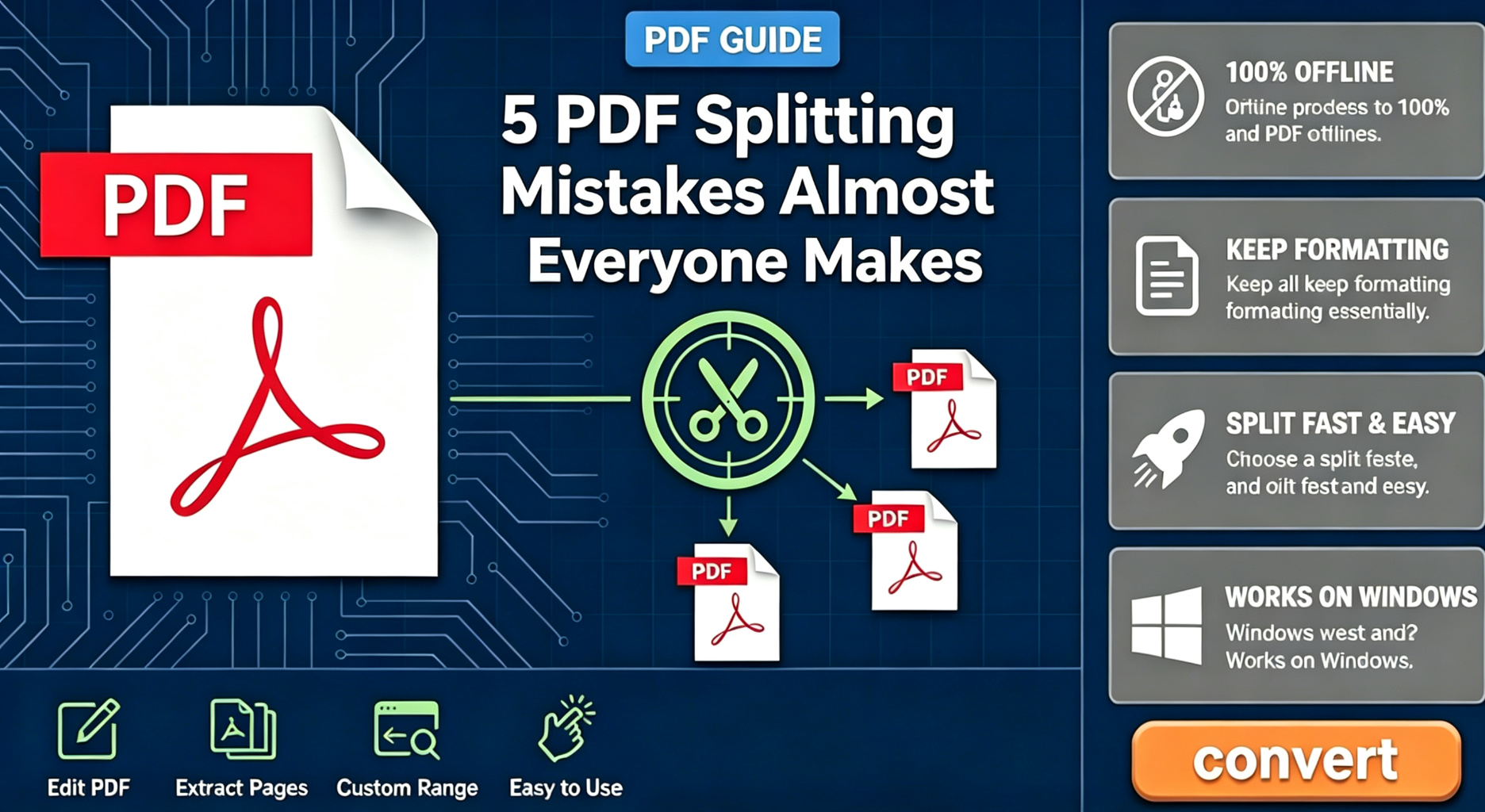
👉 Here are five common PDF splitting mistakes—and how to avoid them.
❌ Mistake #1: Using Screenshots Instead of Splitting the PDF
This is surprisingly common.
Instead of extracting pages directly, some users take screenshots and save them as images.
The result?
⏺ Lower image quality
⏺ Larger file sizes
⏺ Lost text searchability
⏺ Broken document structure
✔ What to Do Instead
Use a proper PDF splitter that extracts pages directly from the original file.
This preserves both quality and functionality.
❌ Mistake #2: Splitting Before Reviewing the Document
Many people immediately start splitting pages without checking the document structure.
Later they discover:
⏺ Missing pages
⏺ Incorrect page order
⏺ Incomplete sections
✔ What to Do Instead
Before splitting:
1. Review the document
2. Identify logical sections
3. Confirm page ranges
A few extra seconds can save a lot of cleanup work later.
❌ Mistake #3: Uploading Sensitive Files to Random Websites
Not every PDF contains public information.
Many documents include:
⏺ Contracts
⏺ Financial records
⏺ Client information
⏺ Internal reports
Uploading these files to unknown online services can introduce unnecessary privacy risks.
✔ What to Do Instead
Whenever possible, use an offline PDF splitter such as LeoPDF.
Because LeoPDF processes files locally, your documents stay on your own device instead of being uploaded to third-party servers.
❌ Mistake #4: Repeatedly Exporting the Same PDF
Some users split a PDF, save it, reopen it, edit it again, and then export it multiple times.
Each extra processing step increases the chance of:
⏺ Formatting changes
⏺ Quality loss
⏺ File inconsistencies
✔ What to Do Instead
Plan the workflow first.
Make the required changes once and export only when you’re finished.
❌ Mistake #5: Choosing a Tool Based Only on Features
Many PDF tools advertise dozens of features.
But more features don’t necessarily mean better results.
A tool packed with options may still struggle with the most important task:
Preserving the original document.
✔ What to Do Instead
Focus on reliability first.
A good PDF splitter should:
✔ Preserve formatting
✔ Maintain image quality
✔ Handle large files smoothly
✔ Keep document structure intact
Tools like LeoPDF focus on practical PDF workflows, making it easy to split, extract, and organize PDF pages without unnecessary complexity.
🥇 Recommended Tool: LeoPDF
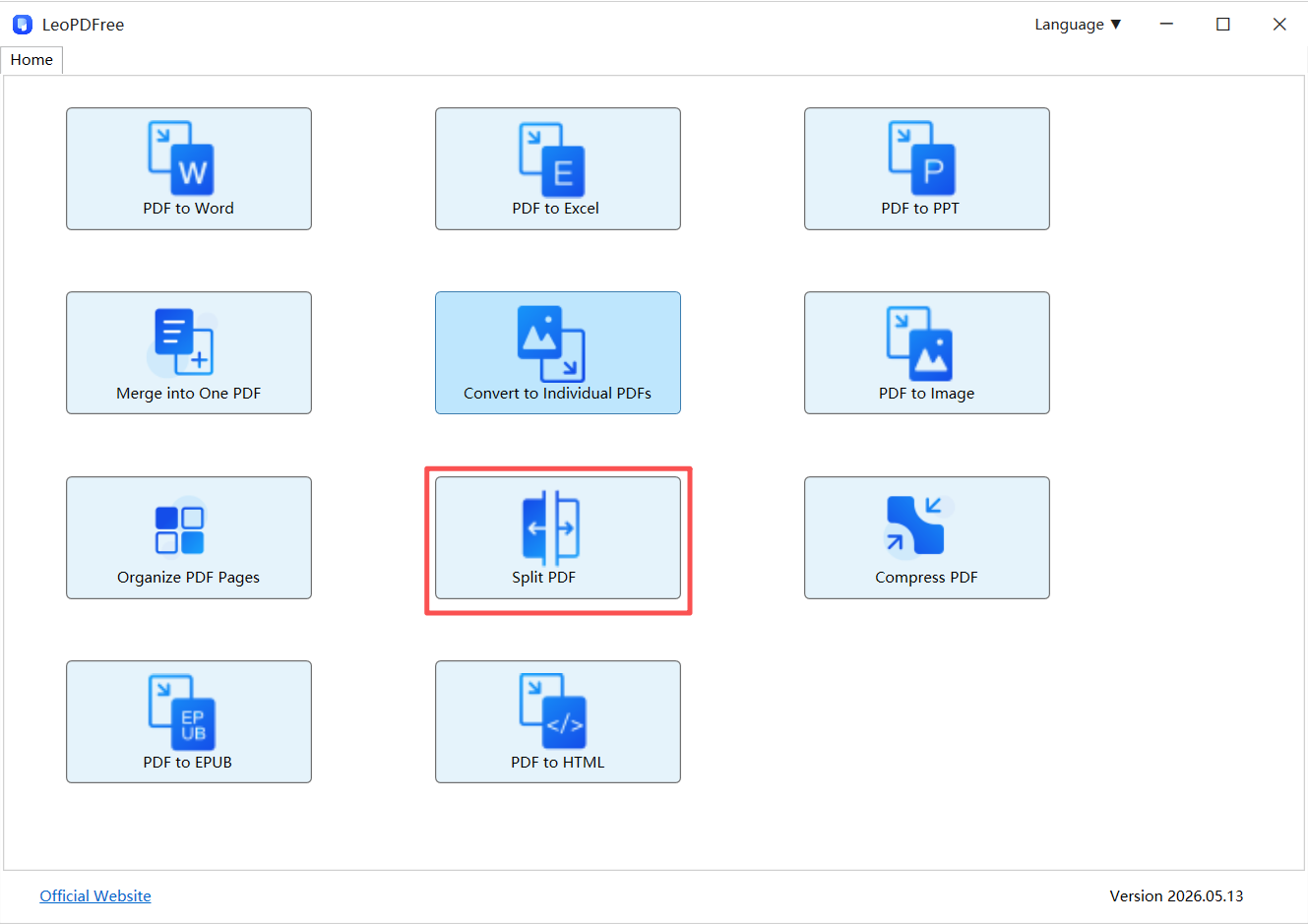
If you frequently work with PDF files, LeoPDF offers a simple and reliable way to manage them.
With LeoPDF, you can:
✔ Split PDFs by page range
✔ Extract selected pages
✔ Reorder PDF pages before or after splitting
✔ Create multiple PDF files at once
✔ Preserve the original formatting
✔ Use all features completely free
Free DownloadSecure Download
👉 Because everything happens locally, there is no need to upload sensitive documents.
Quick Summary
| Mistake | Better Approach |
|---|---|
| Taking screenshots | Extract pages directly |
| Splitting too early | Review document structure first |
| Uploading sensitive files | Use offline tools like LeoPDF |
| Repeated exports | Minimize processing steps |
| Chasing features | Prioritize document quality |
Final Takeaway
Most PDF splitting problems aren’t caused by the PDF itself.
They’re caused by workflow mistakes.
If you want cleaner, faster, and more reliable results:
✔ Extract pages instead of taking screenshots
✔ Review documents before splitting
✔ Keep sensitive files local
✔ Avoid unnecessary exports
✔ Use LeoPDF or another reliable offline PDF splitter to preserve document quality
👉 The smartest PDF workflow isn’t about doing more.
It’s about avoiding the mistakes that cause problems in the first place.
