
PDF is great for preserving a document’s original layout. EPUB is built for something different: comfortable reading across different screen sizes.
If you’re trying to read a long PDF on a phone or e-reader, converting it to EPUB can make a noticeable difference.
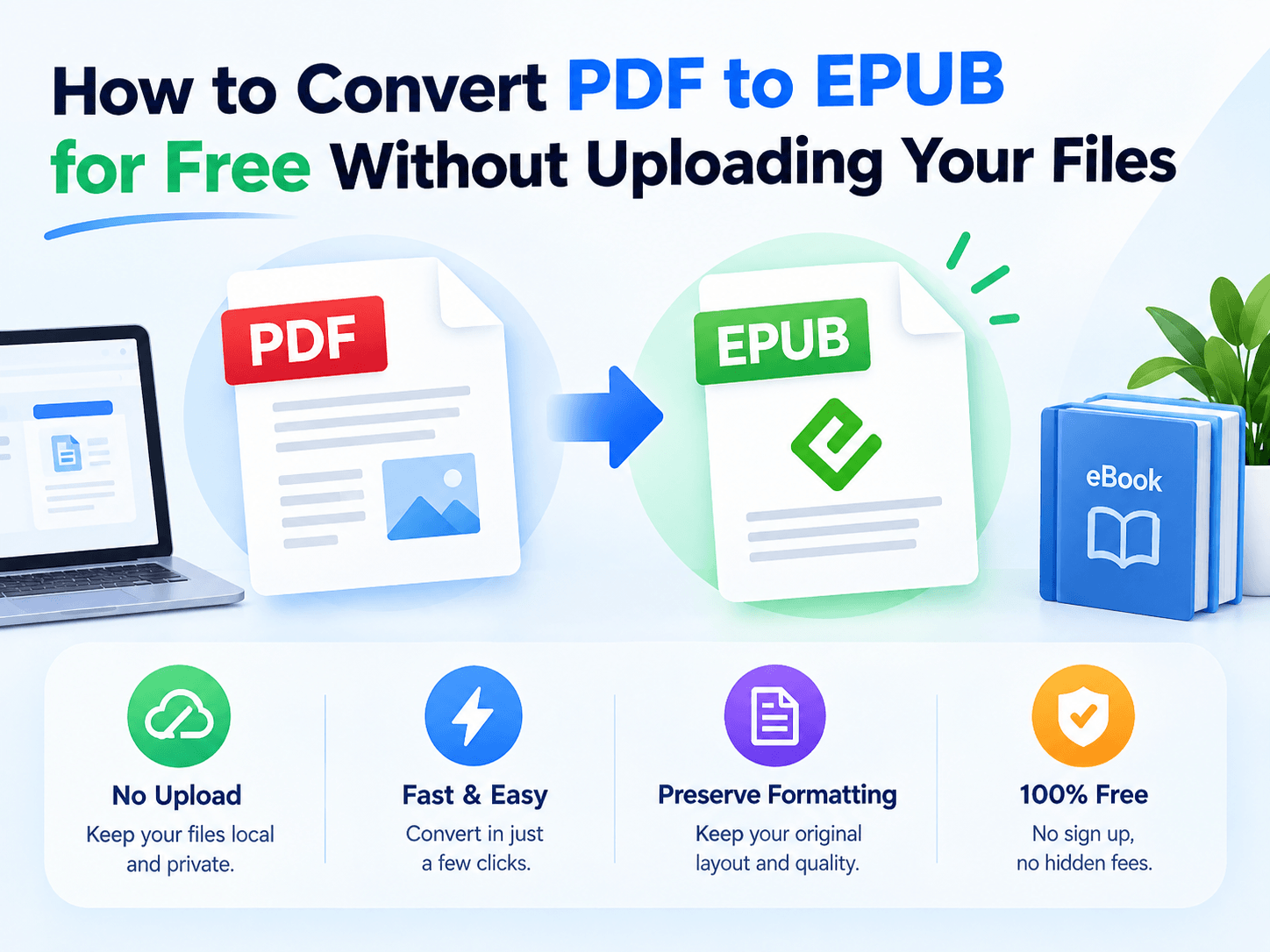
The key question is: how can you convert it without uploading the original file?
PDF vs. EPUB: Same Content, Different Reading Model
| EPUB | ||
|---|---|---|
| Layout | Fixed | Reflowable |
| Small-screen reading | More zooming | Text adapts |
| Font resizing | Limited by page design | Built for resizing |
| Page structure | Preserved | Rebuilt |
| Best for | Print-style documents | Digital reading |
EPUB’s reflowable design allows content to adapt to the reader’s screen and settings.
That makes EPUB particularly useful for text-heavy documents such as books, reports, and long-form articles.
The Privacy Difference
There are two ways to approach PDF conversion:
Upload model
PDF → Online Server → EPUB
Local model
PDF → Your Computer → EPUB
For a public document, either workflow may be acceptable.
For an unpublished manuscript, business report, private notes, or other sensitive PDF, keeping the source file on your own computer can be preferable.
Don’t Expect a Perfect Page-for-Page Copy
his is the part many PDF-to-EPUB guides skip.
Conversion isn’t simply changing .pdf to .epub.
A PDF might contain:
🔵 Fixed text positions
🔵 Multiple columns
🔵 Tables
🔵 Images
🔵 Headers and footers
🔵 Complex page designs
EPUB has to rebuild that content into a different reading structure.
A simple text document may convert cleanly, while a heavily designed magazine can require manual cleanup. EPUB 3 also supports fixed-layout publications, but that is different from the normal reflowable reading experience.
A quick quality expectation
| PDF Type | Expected EPUB Result |
|---|---|
| Novel / text document | ★★★★★ |
| Simple report | ★★★★☆ |
| Technical document | ★★★☆☆ |
| Multi-column paper | ★★★☆☆ |
| Magazine / complex design | ★★☆☆☆ |
| Scanned PDF without text | Requires OCR |
The ratings above are practical expectations, not a universal conversion benchmark.
A Better Conversion Workflow
Instead of converting everything blindly, use a simple three-stage process:
01 — Check the PDF
Make sure the text is selectable. A scanned PDF may contain page images rather than actual text.
02 — Convert for reading
Choose EPUB when you need resizable, reflowable text rather than the original page layout.
03 — Check the result
Open the EPUB and quickly review headings, paragraphs, tables, and images.
That final check matters because PDF-to-EPUB conversion is essentially a layout reconstruction, not a file-extension change.
Where LeoPDF Fits
If your PDF needs cleanup before conversion, LeoPDF can handle the preparation locally on your computer.
For example, you can remove unnecessary pages, extract the section you actually need, reorder pages, split or merge PDFs, and then convert the prepared document to another format.
This is useful when the original PDF is 100 pages but the EPUB only needs a 30-page chapter or selected section.
100-page PDF → Select relevant content → Clean up → Convert → EPUB
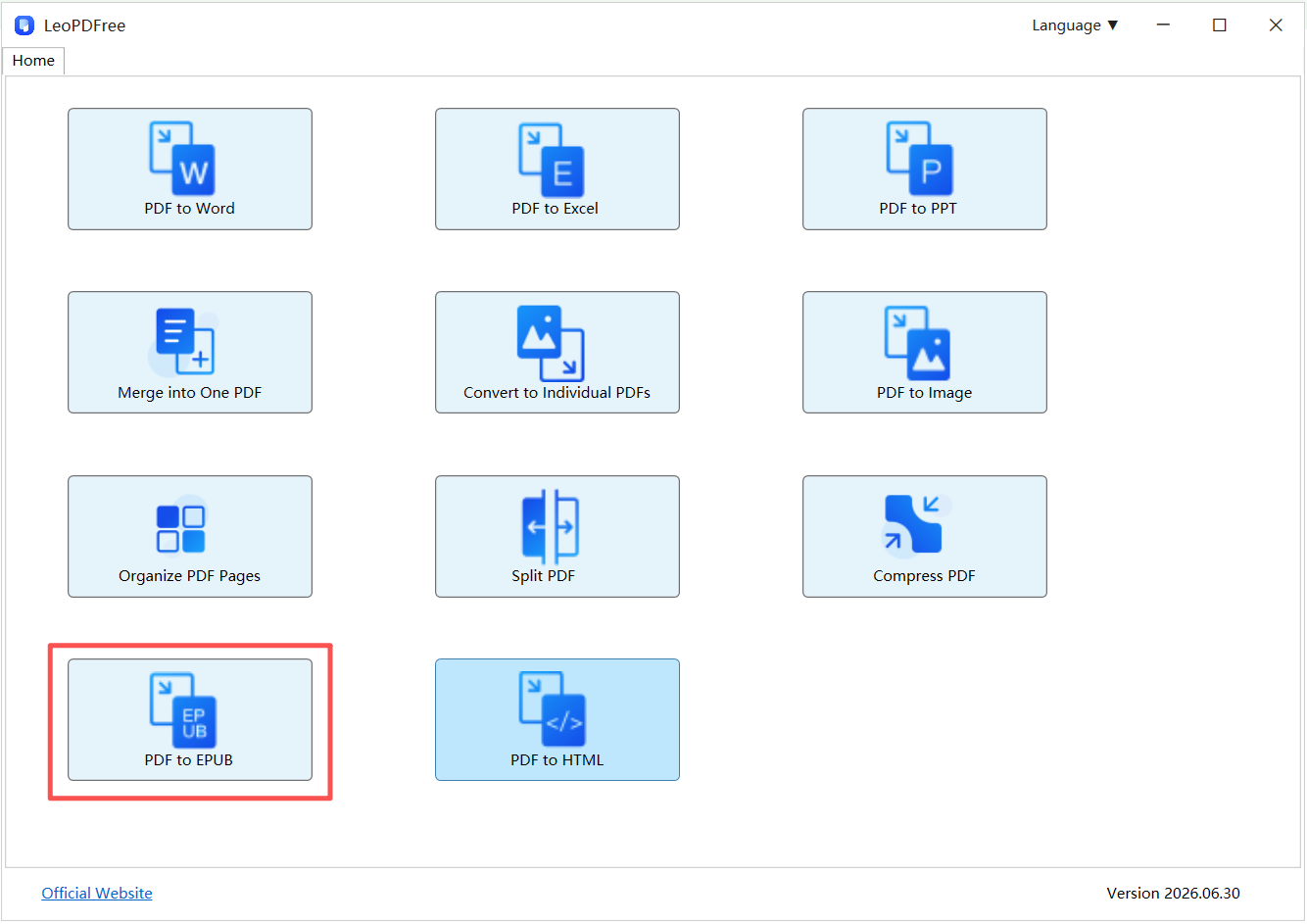
Free DownloadSecure Download
📢 The advantage is that the original document doesn’t need to be uploaded to an online PDF service during the local editing process.
One Simple Rule
Use PDF when preserving the exact page appearance is the priority.
Use EPUB when reading flexibility matters more than fixed page layout.
If privacy matters too, keep the conversion workflow local whenever practical.
Final Takeaway
Converting PDF to EPUB isn’t just about changing formats. It’s about changing how the content behaves.
PDF = fixed layout
EPUB = adaptable reading
For text-heavy PDFs, EPUB can provide a more flexible reading experience on phones, tablets, and e-readers. For complex layouts or scanned documents, expect additional cleanup or OCR before conversion.
And when the source file is private, a local workflow can keep the original PDF on your own computer instead of sending it to a third-party server.
